
Creative writers aren’t just storytellers—they’re cognitive architects, emotional cartographers, and ethical explorers. In a world increasingly shaped by mechanization and artificial intelligence, their work remains irreplaceable. This post explores the neuroscience behind creativity, the myths we’ve outgrown, and the unique power of speculative fiction writers to surprise, reveal, and transform.
Mechanization, AI, and the Creative Soul
Today’s anxieties about artificial intelligence echo the fears of mechanization from the 1960s. Neither AIs or machines daydream. They don’t ruminate on alternate existences or feel the emotional weight of a metaphor. Creative writers do.
“The most regretful people on Earth are those who felt the call to creative work, who felt their own creative power restive and uprising, and gave to it neither power nor time.” —Mary Oliver, Poet and Pulitzer Prize winner.
Beyond Left Brain / Right Brain: The Real Creative Engine
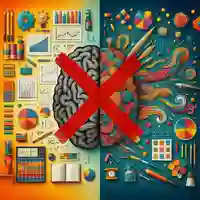
The old myth of “left-brained logic” vs. “right-brained creativity” is outdated. Neuroscience reveals that creativity arises from neural networks, not brain hemispheres. The Default Mode Network (DMN) and the Imagination Network span multiple regions across both sides of the brain. These systems collaborate to generate ideas, simulate alternate realities, and reflect on meaning.
The DMN is a powerhouse that mostly operates outside of our consciousness—some estimates suggest it consumes up to 90% of the brain’s energy during rest. It’s active during daydreaming, memory recall, and future planning. It’s where compassion, perspective, and narrative coherence are born.
Executive Network: Effective, Not Always Creative
The brain’s Executive Control Network helps us focus, plan, and execute tasks. It’s essential for productivity—but not necessarily for originality. A person can be highly effective without being creative.
Super Power of Creative Writers
Creative writers’ brains are different. They are adept at consciously bridging between the DMN and the Executive Network, allowing spontaneous ideas to be shaped into coherent stories. A common trait of creative writers is an ability to deeply understand emotion and how to manipulate it via story telling. A high IQ helps in technical fields, but many acclaimed writers have average intelligence; sustained effort, curiosity, and empathy are better predictors of success. They also have a feel for how to surprise readers. The last couple lines of most short stories are a perfect example. Surprise in storytelling often feels inevitable in hindsight—a twist that clicks into place like a puzzle piece you didn’t know was missing.
“An act that produces surprises [is] the hallmark of the creative enterprise.” —Jerome Bruner, Psychologist
Surprise, Fusion, and the Myth of Originality
Creativity isn’t always about pure originality—it’s often about fusion. Writers who read widely absorb techniques, styles, and ideas, then recombine them in surprising ways.
“Plagiarism is the seed of creative work.” —Mark Twain
Creative Writers Are Architects of Meaning
Speculative fiction writers, in particular, build alternate worlds to explore real truths. They couple the DMN’s rich internal simulations with the imagination network’s expansive reach. They don’t just entertain—they reveal, challenge, and transform. Creative writers truly are special.

R. C. Beckett was given a collection of Fantasy and Science Fiction Magazines as a teenager and read hundreds of the stories — he was hooked and started writing fiction in 2013. He loves to write hard science fiction, but can’t help adding a bit of humor. Publications: “Exit Mars” and “Exit Earth” (available on Amazon). “Exit Pluto”, the third in the Exit series, should be published in the near future. He is finishing up a new novel, Legacy of Earth. He lives in Golden Colorado and is a member of Rocky Mountain Fiction Writers. Walking his dog is key to his writing since that’s when he imagines plots for his stories. He also volunteers as a webmaster for non-profit companies including SpecFicWriters.
My own experience is that the combination of creative writer + AI (in a careful balance) can be quite powerful.